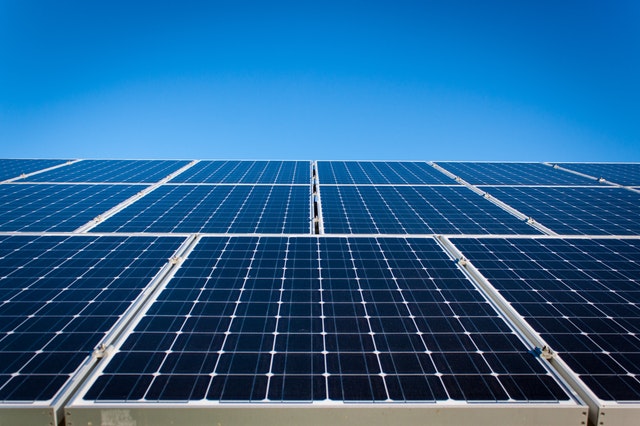
 Do rooftop solar panels add value to a home, and are they cost-effective in terms of energy savings? The short answer is yes, say the experts. Although more than a million U.S. homes boasted solar panels in 2016, the percentage of solar-equipped households is still miniscule.
That may change, however, as domestic prices for solar installations continue to decrease and property values rise.
The Pros And Cons Of Solar
While there is global agreement on the need to encourage cost-effective, non-polluting renewable energy sources, it is also acknowledged that solar effectiveness is not equal in all locations or situations.
Several Southwestern states boast abundant sunshine, a high percentage of roofs that face in the proper direction for solar capture, and high consumption of electricity, including the the need for air conditioning. Experts predict that California could supply 74 percent of its total electrical needs if its roofs were clothed in solar panels.
On the other hand, Nevada, with a much smaller population and a different climate, only has the ability to supply 14 percent of its total need. The truth is that solar is not equally beneficial in all locations.
Solar Costs On Par With Grid Electricity
Even so, according to information provided by the Union of Concerned Scientists, more than half of U.S. states have reached or are close to the point where rooftop solar costs are on par with grid costs for electricity. In areas where utility companies offer net metering, solar producers can return excess energy for credit, which results, in the best of cases, in a monthly electricity bill that is extremely low, perhaps even zero.
Before committing to rooftop solar panels, homeowners should ask some pertinent questions. An investment in solar is still pricey, even though installation costs have dropped by about 50 percent over the past decade. With government incentives of various kinds, the total cost may dip to $10,000 or below for an average size home.
On average, the payback on that initial investment will be long-term, even though monthly savings on electrical bills can be immediate. Panel leasing is a popular option, with no initial down payment required, although the lease term may extend for 10 or even 20 years. Another option in some areas is to invest in a solar farm or cooperative.
Important Questions For Homeowners
Pertinent questions include personal motivation: Are solar panels simply a way to save money or do they demonstrate eco-consciousness and a concern for quality of life? Owners should also consider how long they plan to own a specific home before investing in rooftop panels.
Current data suggests that buyers will pay a premium for solar-equipped homes. A study by Energy Sage confirms that buyers in some states are more “pro-Solar” than other U.S. residents, but notes that the national value boost is around $15,000 for an average solar home, and higher in select locales. That equates to between $3 and $4 per kilowatt of solar power generated.
Even though the added value is not uniform throughout the country, it is obvious that rooftop solar panels are emerging as mainstream home amenities.
 Before delving into tax-deductible home improvements, it’s important to understand that these tax deductions won’t be applied immediately. In most cases, homeowners can only benefit, tax-wise, from their home renovations later, when they sell their home.
 Last week’s economic reports included readings on inflation, the minutes of the most recent meeting of the Fed’s Federal Open Market Committee and weekly reports on mortgage rates and first-time jobless claims. The University of Michigan released its Consumer Sentiment Index for April.
 US homeowners now have over 5 trillion dollars in home equity which is a very large amount of money! So this year may be the year for a lot of cash out refinances and other home equity mortgage products. Most often, when you are purchasing a home, you are buying at or below the appraised value and you are making a down payment.
 When the chatter was at its peak on the 2018 tax law changes being proposed, one of the big areas of concern for homeowners was the elimination of the mortgage interest deduction. Right behind that issue was a similar treatment with regards to property tax deductions.
 The digital age has changed the way buyers browse for and purchase goods and services, including real estate. While home buyers still can check out property listings via a print newspaper or by driving through desired neighborhoods in hopes of finding a “for sale” sign, digital sources offer more options and can make the home buying process easier.
  When you are a homeowner looking to reduce your carbon footprint, there are a number of steps you can take to make your home earth-friendly. From passive solar heating to solar panels, you can make a difference in the impact your home has on the environment.
 Last week’s economic reports included readings on construction spending, mortgage rates and weekly jobless claims. Other labor-related claims included ADP payrolls, Non-Farm Payrolls and the national unemployment rate.
 Owning a home is important to military veterans just like the majority of other consumers. The Veteran’s Administration has provided an exceptional benefit for those who have served (or are currently serving) in any of the armed forces. And this VA Loan Program is helping thousands of service members achieve the goal of home ownership.
 Although the majority of the Generation Z population make $25,000 or less per year, they really have embraced the American Dream of home ownership. According to a recent survey by Zillow, 97 percent of Gen Z renters asked were confident they will be homeowners in the future, whereas only 55 percent of Millennials were