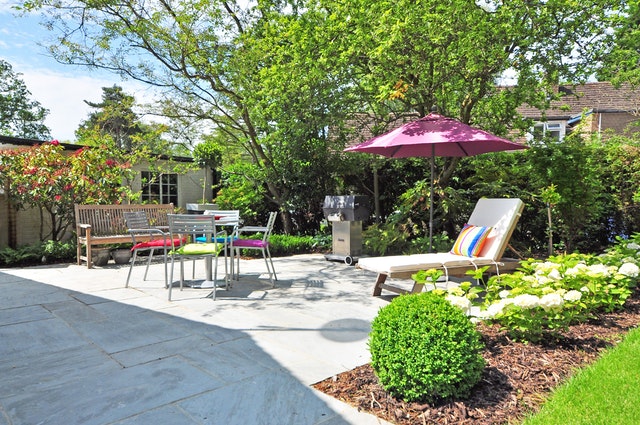
 The oft-repeated maxim that there is never a second chance to make a great first impression is especially true when it comes to real estate. Street appeal may focus on a dramatic approach to the front door, but prospective buyers will be especially “wowed” by an appealing back yard.
Early spring is the perfect time to add some new plants, set out pots of blooming flowers and focus on one memorable feature. A little work now will pay big dividends later, in terms of buyer interest, increased showings, quick offers, and even a higher price.
Here are 7 ideas that are cost-effective weekend projects:
- Create a focal point: Find an antique garden trellis and plant some vines to create an arbor. Add a piece of sculpture or statuary either in the center of the yard or in a secluded garden spot. Install a “gate to nowhere” and add bright flowers on one side. Paint giant sunflowers on a privacy fence or on the side of a storage shed.
- Build a partial wall or shade trellis: There is little that’s more appealing that an an “outdoor living room.” Accent and define your patio space in an interesting way — use a sisal rug or paint a graphic design on the concrete — and fill the room with appropriate furniture. Add a small fountain or a charcoal fire pit to create a real gathering spot.
- Install a simple drip irrigation system: Minimize landscape upkeep by planning DIY drip irrigation that will keep planting areas looking their best. All that’s really needed is some tubing and a few fittings; the system itself can be attached to an outside hose bibb and operated by a simple timer. It’s not necessary to extend the system to the entire lawn; that would be a more costly and time-consuming project perhaps best left to a professional.
- Create a dry creek bed: If parts of the yard or garden are plagued by standing water following heavy rain, give drainage an assist by making a dry creek bed. It’s not too difficult and will add function and beauty to the back yard. Add some large boulders or a “Zen bench” to boost the appeal.
- Plant or hang solar lights: Define a pathway, highlight planting areas or just add night-time interest to the yard with solar lighting. Buy inexpensive versions at a home store, or order artistic lights from a catalog. They’re fun, functional and portable.
- Plant a specialty garden: Attract butterflies and hummingbirds with a patch of wildflowers. Build a small raised garden plot to grow kitchen herbs, or plant seasonal vegetables and edible flowers. Carrots. kale and rainbow chard are especially pretty and don’t take much space. Melons, squash and pumpkins have beautiful flowers and yield great fruit, but they do spread!
- Clean up, trim, weed and mow: Finally, don’t neglect the routine maintenance that is required in every yard, both front and back. Nothing else is as important to prospective buyers as an attractive, well-kept home exterior.
 Several generations ago, lenders required home buyers to have a 20 percent down payment in order to get a mortgage. While there were a few options out there for people who couldn’t save this substantial amount, the reality was that for the majority of people, the 20 percent down was a requirement.
 Last week’s economic news included readings From National Association of Home Builders, Commerce Department reports on housing starts and building permits issued Weekly readings on mortgage rates and new jobless claims were also released.
 Like credit cards or car loans, some mortgages allow borrowers to have co-signers on the loan with them, enhancing their application. However, a co-signer on a mortgage loan doesn’t have the same impact that it might on another loan. Furthermore, it poses serious drawbacks for the co-signer.
 U.S. military veterans have opportunities to enjoy some richly-deserved benefits in other aspects of their lives, including some special options for financing their homes. VA loans may give active military personnel, retired veterans, and sometimes surviving family members of veterans the ability to purchase homes that might not prove available to them through more conventional mortgage loans.
 Sustainable materials, energy savings and smart home technology are high on the list of buyer wants in a home. But there are some other architectural and design trends that will change the way Americans live this year and beyond.
 The major problem that the vast majority of buyers will run into – especially when purchasing their first home – has to do with a lease agreement that is still active with their apartment complex at the time of the purchase. If you locate the perfect home in February but your lease isn’t over until August, you can’t be expected to wait around.
 Last week’s economic releases included reports on Non-Farm Payrolls, ADP payrolls, and the national unemployment rate. Weekly readings on mortgage rates and new jobless claims were also released.
 Do you find yourself staring out the window, longing for an early sunrise, hot days and late evenings? With spring just around the corner, it might feel like summer is a lifetime away.
 Often times, home buyers can be disappointed when they find their dream home only to discover they are not able to get a mortgage to purchase the property. There are methods that potential buyers can use to ensure this does not happen to them.