
• Texas Real Estate Commission Consumer Protection Notice
  • Texas Real Estate Information About Brokerage Services

Navy Fellas Realty Group

Real Estate, Residential sales and purchase

  • Home
  • About Us
    • About James
    • About Ashley
    • About Our Team
    • Accessibility Statement
  • Property Search
  • Resources
    • Home Buyer Tips
    • Home Seller Tips
  • Video Walkthroughs
    • Saratoga Homes (Plantation Lakes -Katy, Tx.)
    • David Weekly Home (Towne Lake)
    • Taylor Morrison Home (Alder Trails)
    • Ashton Woods (Towne Lake)
  • Blog
  • Contact

The Pros and Cons of ‘Mortgage Before Marriage’ for Young Couples

May 10, 2022 by James Scott

The Pros and Cons of 'Mortgage Before Marriage' for Young CouplesThere was a time when a higher percentage of people were married before they committed to buying a home together, but it’s a lot more common to co-habit and invest in a home together. If you’re considering the commitment of a mortgage without being married, here are some things to be aware of before you start searching the market.

Relationship Status Won’t Affect Your Rates

It might seem like there are greater risks involved if two individuals purchasing a property are not legally bound, but it actually makes no difference to the mortgage lender. If two people are buying a home together, the lender is going to be assessing their credibility based on their individual credit reports and financial history, not on their relationship to each other. While it may seem like co-habiting will have an impact, the proof – as far as lenders are concerned – is in the numbers.

What’s Your Credit History?

Most people are aware of their credit history, whether they’ve had financial hiccups in the past or are still paying off a significant amount of debt. However, it is more difficult for some to know the financial background of their partner, and this can be more common when it comes to co-habiting. Because the lender will be looking at both credit scores, if you or your partner have had financial issues in the past, it can have an adverse impact on your application. While you may have a nearly perfect credit history, if your partner does not this can make mortgage approval more difficult.

In The Event Of Separation

Home ownership can involve significant hurdles after a divorce, but there will still be some legal and financial issues to wade through if you’ve never been married. Since it’s likely that you won’t want to continue to co-habit, there’s the possibility that one party will have to buy the other out, which can be a sizeable financial burden. While this type of situation may never come to fruition, it’s important to be aware of what might occur so you can be prepared.

There can be a lot of complexities involved in co-habiting whether you’re married or not, but it’s important to have an awareness of your partner’s financial history and be prepared for financial hurdles. If you’re currently on the market for a new home, contact one of our mortgage professionals for more information.

Filed Under: Real Estate Tips Tagged With: New Home, Real Estate, Real Estate Tips

What’s Ahead For Mortgage Rates This Week – May 9, 2022

May 9, 2022 by James Scott

What's Ahead For Mortgage Rates This Week - May 9, 2022Last week’s scheduled economic reports included readings on construction spending, the Federal Reserve’s Federal Open Market Committee statement, and the Fed Chair’s press conference. Readings on public and private-sector jobs growth and the national unemployment rate were released along with weekly readings on mortgage rates and jobless claims.

Construction Spending Slows in March, Fed Raises Key Rate

Construction spending fell in March according to the Commerce Department. Spending increased by 0.10 percent as compared to the expected reading of 0.80 percent and February’s reading of 0.50 percent. Less construction spending could indicate a slowdown in building as builders face rising operations and materials costs. 

The Federal Reserve’s Federal Open Market Committee initially considered raising the federal rate to 0.75 percent, but Fed Chair Jerome Powell vetoed that option, and committee members agreed to raise the federal funds rate to 0.50 percent. This increase was the highest in more than 20 years.

Chair Powell said in his post-meeting press conference that he wanted to address the American people and that inflation was too high. “We understand the hardship it’s causing and we’re moving expeditiously to bring it back down. We have the tools we need and the resolve that it will take to restore price stability on behalf of American families and businesses.” Mr. Powell declined to identify a specific number defining the Fed’s goal of achieving a “neutral” average interest rate.

Mortgage Rates Rise, Jobless Claims Data Mixed

Freddie Mac reported higher mortgage rates as the average rate for 30-year fixed-rate mortgages rose by 17 basis points to 5.27 percent; rates for 15-year fixed-rate mortgages averaged 4.52 percent and 12 basis points higher than in the prior week. Rates for 5/1 adjustable-rate mortgages averaged 3.96 percent and 18 basis points higher. Discount points for 30-year fixed-rate mortgages averaged 0.90 percent and 0.80 percent for 15-year fixed-rate mortgages. Points for 5/1 adjustable-rate mortgages averaged 0.20 percent.

New jobless claims rose to 200,000 initial claims filed last week as compared to 181,000 new claims filed in the prior week. Analysts expected a reading of 182,000 new claims filed. Fewer continuing jobless claims were filed last week with 1.38 million claims filed as compared to the prior week’s reading of 1.40 million ongoing jobless claims filed.

The economy added 428,000 public and private-sector jobs in April; the national unemployment rate was unchanged at 3.60 percent. 

What’s Ahead

This week’s scheduled economic reporting includes readings on inflation and the University of Michigan’s consumer sentiment index. Weekly readings on mortgage rates and jobless claims will also be released.

Filed Under: Financial Reports Tagged With: Financial Report, Home Prices, Mortgage Rates

A Guide To Investing In Real Estate Rentals

May 6, 2022 by James Scott

A Guide To Investing In Real Estate RentalsIf you are thinking about purchasing an investment property, you probably understand this is a great way to diversify your investments. On the other hand, you also need to understand how to evaluate potential rental properties and how to make sure you can generate enough income to cover the overhead expenses related to the property. What do you need to know?
Pay Down Personal Debt First

Before you decide to take on a second mortgage, you need to pay down as much of your existing debt as possible. If you have unpaid medical bills, student loans, and car loans, you need to pay down the step before you decide to purchase an investment property. You need to have cash available to pay down your current and second mortgage, so you do not want to have other sources of debt dragging you down. 

Have Enough Money For A Down Payment

Investment properties typically have more stringent requirements regarding down payments. Even though you might have qualified for a first-time homeowner loan for only 3.5 percent down, that is not going to cut it for an investment property. You will probably need to have at least 20 percent of the property’s value available for a down payment. Mortgage insurance generally is not available on rental properties.

Consider Location

Just as you did with your original property, you need to think carefully about the location of your rental property. You need to purchase a property that has the potential to go up in value. You should also think about properties that have a strong school system, easy access to amenities, and relatively low property taxes. You also need to pay attention to crime rates and the health of the job market.

Consider Rent And Unexpected Costs

Finally, after you find a lender who can help you, make sure you think about your rental stream and any unexpected expenses. You need to have enough rent coming in every month to cover your mortgage, real estate taxes, and homeowners insurance. You should also have money set aside to cover unexpected expenses such as roof damage, HVAC issues, and plumbing problems. Stay on top of these issues to protect the value of your property. 


Filed Under: Real Estate Tagged With: Down Payment, Real Estate, Real Estate Investing

Understanding Your Debt To Income Ratio: What It Means

May 5, 2022 by James Scott

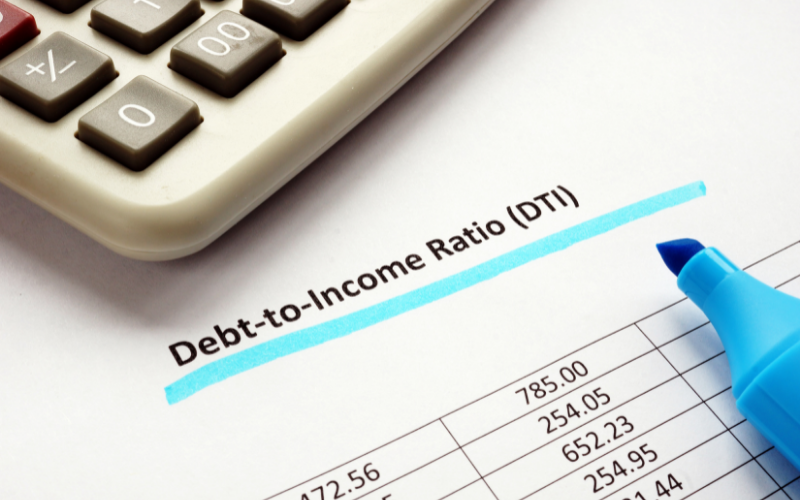
Understanding Your Debt To Income Ratio: What It MeansIf you are looking for a home, you might need to finance it using a lender, such as a bank or a credit union. There are a number of factors that will influence whether your mortgage application is approved. Then, these same factors will play a role in the terms the lender might offer you. One of the most important factors is called the debt to income ratio, or DTI. It is important to understand how this will impact your mortgage application.

What Is A Debt To Income Ratio?

Your DTI is important to the lender because this allows the lender to figure out the likelihood of you paying your mortgage on time. The less debt you have, the more financial stability you have to pay a potential mortgage. 

To calculate your debt to income ratio, you need to calculate all the bills you have for the upcoming month. For example, if you have rent and a car payment, you add these numbers together. Then, you divide this number by your gross monthly income. If your rent is $900 and your car payment is $200, your total debt is $1100. Then, if you earn $3300, divide $1100 by $3300. This is about 33 percent.

Student Loan Debt Is A Driving Factor

With many members of the younger generation getting ready to purchase a house, it is important to understand the impact of student loan payments. Because a lot of potential home borrowers have student loans to pay back, their debt-to-income ratios will be significantly higher. This could make it harder for younger borrowers to get qualified for a mortgage, particularly one with favorable terms.

How To Improve Your Mortgage Application

Before you apply for a home loan, you should try to improve your debt to income ratio by paying down your existing bills. For example, if you have credit card debt, this will be included in your debt to income ratio. Try to pay this off before you apply for a mortgage. You should try to pay down your student loans as much as possible before applying for a mortgage as well. The less debt you carry, the more likely your mortgage application will be approved. 


Filed Under: Real Estate Tagged With: Debt to Income, Mortgage Payment, Real Estate

6 Tips That Will Help You Get the Most Out of Your Home Inspection

May 4, 2022 by James Scott

6 Tips That Will Help You Get the Most Out of Your Home InspectionA home inspection may be one of the last things that needs to be done before the deal is sealed. However, it’s very important to have a proper inspection done so that you can ensure you’re offering price is appropriate for the home you’re getting. If you’re prepping for an inspection soon, here are some things you’ll want to consider beforehand.

Choose A Good Inspector

Like a good agent, the right inspector is going to have expertise in what they do and know what to look for. They will not only find the small fix-ups, they’ll be able to highlight the potentially huge issues that may arise down the road.

Prepare Your Papers

Your inspector may be able to do their job well on their own, but if you’ve noticed any issues when you’ve visited the house, it’s important to address them. While they may amount to nothing, an inspector will be able to clear up any confusion.

Ask The Questions

Whether you’re experienced with real estate or not, ask the questions you want to ask whether or not they make you feel like a novice. Even if the answer is simple, it will give you the information you’re looking for.

Get The Lowdown

It might seem like a bridge too far, but talking to neighbors in the area can give you a good sense of the overall upkeep of the home. While it’s unlikely you’ll get any unfortunate tales, people in the area may be able to illuminate you on the house’s history.

Partake In The Inspection

It’s good enough for many a homeowner to get a written report, but going along to see the house can facilitate conversation and may give you insights into what to watch out for. It may also mean you have a clearer idea of any potential issues.

Facilitate The Discussion

In the event that there are significant issues with the home, it may be worth talking with the inspector about dealing directly with the contractor. While this may or may not be necessary, it’s a good way to ensure any problems will be effectively communicated and can be rectified.

A home inspection may be par for the course, but by asking the right questions and being involved you can ensure you’ll get the most out of your inspection. If you’re currently in the market for a home, contact your local real estate professional for more information.

Filed Under: Home Buyer Tips Tagged With: Buying A Home, Home Buyer Tips, Real Estate Tips

Common Fees During Refinancing

May 3, 2022 by James Scott

Common Fees During RefinancingAs interest rates fluctuate, you might think about refinancing your mortgage. This is the cost of taking out a new home loan to replace the one you currently have. If you get a significantly lower interest rate, you could save tens of thousands of dollars over the life of the mortgage. On the other hand, you need to think about potential expenses you might incur during the refinancing process. Because you are taking out another home loan, you may need to pay closing costs a second time. What are some of the most common expenses you might have to pay?

The Mortgage Application Fee

One of the most common expenses is the mortgage application fee. Essentially, this is a fee that the lender will charge for opening up a new application on your behalf. The fee can vary significantly depending on the lender you use, but it is usually a few hundred dollars.

A Home Appraisal

When you took out your first mortgage, the lender probably required you to get your home appraised. The lender wants to make sure they are not financing a home that is not worth as much as its price tag. You still need to get your home appraised again if you decide to refinance your mortgage. The lender wants to make sure they understand how much the house is worth before they give you a loan for it. A typical home appraisal is also a few hundred dollars.

Title Search And Title Insurance

The lender might also require a title search and title insurance. This is important for making sure you protect yourself in the event someone else still holds the title to your house. A title search is usually a few hundred dollars, and title insurance could be $1,000 or more.

Loan Origination Fee

Most lenders charge a loan origination fee that is approximately one percent of the value of the loan. Again, this can vary from lender to lender as well. 

Understand These Fees

There are lots of potential fees that a lender might tack on. Fortunately, you do not necessarily need to pay for all of them. Always ask the lender whether they might be willing to waive some of these fees to make the cost less expensive. 


Filed Under: Real Estate Tagged With: Fees, Mortgage, Refinance

What’s Ahead For Mortgage Rates This Week – May 2, 2022

May 2, 2022 by James Scott

Last week’s economic reporting included readings from S&P Case-Shiller Home Price Indices, the Federal Housing Finance Agency House Price Index, and the Commerce Department on sales of new homes. Weekly readings on mortgage rates and jobless claims were also reported. S&P Case-Shiller, FHFA Report Near-Record Home Price Growth February home prices continued their rapid growth, but analysts hinted at a coming slowdown in-home price growth as would-be buyers were faced with rising mortgage rates and affordability concerns. S&P Case-Shiller’s National Home Price Index reported year-over-year home price growth of 19.80 percent as compared to January’s national home price growth rate of 19.10 percent. The 20-City Home Price Index reported the top three cities for year-over-year home price growth were Phoenix, Arizona with 32.90 percent growth, Tampa, Florida reported 32.60 percent growth in home prices, and Miami, Florida reported year-over-year home price growth of 29.70 percent. All cities reported in the 20-City Home Price Index had double-digit growth in February and the pace of home price growth was faster for all 20 cities than in January. In related news, the Federal Housing Finance Administration reported that home prices for homes owned by Fannie Mae and Freddie Mac rose by 19.40 percent year-over-year and were 2.10 percent higher month-to-month.  Pending home sales were lower in March by -1.20 percent, as compared to the expected reading of -1,80 percent and February’s reading of -4.00 percent. Rising inflation and home prices created affordability concerns for first-time and moderate-income homebuyers. Mortgage Rates Mixed, Jobless Claims Fall Freddie Mac reported a lower average rate for 30-year fixed-rate mortgages dropped by one basis point to 5.10 percent; rates for 15-year fixed-rate mortgages averaged 4.40 percent and were two basis points higher. Rates for 5/1 adjustable rate mortgages averaged 3.78 percent and three basis points higher. Discount points averaged 0.80 percent for 30-year fixed-rate mortgages and 0.90 percent for 15-year fixed-rate mortgages. Points for 5/1 adjustable rate mortgages averaged 0.30 percent. New jobless claims fell last week with 180,000 initial claims filed as compared to 185,000 first-time claims filed in the previous week. Continuing jobless claims held steady with 1.41 million ongoing claims filed and matched the prior week’s reading.  The University of Michigan’s Consumer Sentiment Index fell by one-half point in April with an index reading of 65.2. The expected reading of 65.7 matched the March reading. Concerns over rising inflation, fuel prices, and the war in Ukraine contributed to lower consumer sentiment.  What’s Ahead This week’s scheduled economic news includes readings on public and private-sector jobs growth, the national unemployment rate, and a news conference by Fed Chair Jerome Powell. Weekly readings on mortgage rates and jobless claims will also be published.Last week’s economic reporting included readings from S&P Case-Shiller Home Price Indices, the Federal Housing Finance Agency House Price Index, and the Commerce Department on sales of new homes. Weekly readings on mortgage rates and jobless claims were also reported.

S&P Case-Shiller, FHFA Report Near-Record Home Price Growth

February home prices continued their rapid growth, but analysts hinted at a coming slowdown in-home price growth as would-be buyers were faced with rising mortgage rates and affordability concerns. S&P Case-Shiller’s National Home Price Index reported year-over-year home price growth of 19.80 percent as compared to January’s national home price growth rate of 19.10 percent. The 20-City Home Price Index reported the top three cities for year-over-year home price growth were Phoenix, Arizona with 32.90 percent growth, Tampa, Florida reported 32.60 percent growth in home prices, and Miami, Florida reported year-over-year home price growth of 29.70 percent. All cities reported in the 20-City Home Price Index had double-digit growth in February and the pace of home price growth was faster for all 20 cities than in January.

In related news, the Federal Housing Finance Administration reported that home prices for homes owned by Fannie Mae and Freddie Mac rose by 19.40 percent year-over-year and were 2.10 percent higher month-to-month. 

Pending home sales were lower in March by -1.20 percent, as compared to the expected reading of -1,80 percent and February’s reading of -4.00 percent. Rising inflation and home prices created affordability concerns for first-time and moderate-income homebuyers.

Mortgage Rates Mixed, Jobless Claims Fall

Freddie Mac reported a lower average rate for 30-year fixed-rate mortgages dropped by one basis point to 5.10 percent; rates for 15-year fixed-rate mortgages averaged 4.40 percent and were two basis points higher. Rates for 5/1 adjustable rate mortgages averaged 3.78 percent and three basis points higher. Discount points averaged  0.80 percent for 30-year fixed-rate mortgages and 0.90 percent for 15-year fixed-rate mortgages. Points for 5/1 adjustable rate mortgages averaged 0.30 percent.

New jobless claims fell last week with 180,000 initial claims filed as compared to 185,000 first-time claims filed in the previous week. Continuing jobless claims held steady with 1.41 million ongoing claims filed and matched the prior week’s reading.

The University of Michigan’s Consumer Sentiment Index fell by one-half point in April with an index reading of 65.2. The expected reading of  65.7 matched the March reading. Concerns over rising inflation, fuel prices, and the war in Ukraine contributed to lower consumer sentiment.

What’s Ahead

This week’s scheduled economic news includes readings on public and private-sector jobs growth, the national unemployment rate, and a news conference by Fed Chair Jerome Powell. Weekly readings on mortgage rates and jobless claims will also be published.

Filed Under: Financial Reports Tagged With: Financial Report, Jobless Claims, Mortgage Rates

Sale Pending: What Does This Mean?

April 29, 2022 by James Scott

Sale Pending: What Does This Mean? The search for a house can be stressful and filled with lots of jargon that can make it difficult for someone new to the real estate world to figure out what is going on. One of the most common terms that people might see on the MLS is “sale pending.” What does this mean, and how should people interpret this?

An Overview Of Sale Pending

If a listing says that it is “sale pending,” it means that the buyer and the seller are under contract. While the deal is not yet set in stone, it means that the seller has accepted an offer, and there is a contract in place for the sale of the house. There might also be some contingencies to meet before the sale is finalized. 

Making An Offer On A Sale Pending House

This is something that someone can certainly do, but it might not be worth the time of the prospective buyer. If a higher offer comes in, the seller is still contractually obligated to honor the original offer. Buyers that want to make a backup offer should talk to a real estate professional to make sure they submit an offer properly. 

Why A House May Come Back On The Market

There are a few reasons why a house might come back on the market after being listed as pending. Sometimes, the home inspection doesn’t come back favorably, and the buyer might elect to withdraw the offer to find a house with fewer problems. Or, the buyer might have had a hard time finding financing, and cannot buy the house without a home loan. The seller might also be trying to force a short sale, which the bank might not approve, thus canceling the transaction.

Pending Versus Contingent: What This Means

Pending and contingent are similar terms, but they are not the same things. If a listing has gone “contingent,” it means that an agreement is in place but the buyer has to meet a number of contingencies before the sale can be finalized. If a sale is listed as pending, it means that all of the contingencies have been met and the sale is likely to close. Buyers may want to reach out to the seller agent for clarification if they are confused. 

Filed Under: Real Estate Tagged With: New Home, Real Estate, Sale Pending

What Home Improvements Sellers Should Make In 2022

April 28, 2022 by James Scott

What Home Improvements Sellers Should Make In 2022Owning a home is an investment, and it is important for people to treat it as such. Some homeowners are looking for improvements they can make to their house that might improve its resale value. There are a number of home improvements that seller should consider making in 2022 if they want to maintain or increase the value of their home.

Add A Stone Veneer

One of the top home improvements homeowners might want to make is to add a stone veneer. It can be expensive to replace the siding of a house with a stone veneer, but this is an improvement that can add significant value to the house over time. Furthermore, homeowners might expect the cost of the veneer to recoup almost all of its value when they go to sell the house.

Update And Remodel The Kitchen

Another upgrade that homeowners should consider is remodeling the kitchen. Styles change over time, and the needs of homeowners can change over time as well. Remodeling the kitchen can be both a stylistic upgrade as well as a functional one. People spend a lot of time in the kitchen, and a prospective buyer might be willing to pay a lot of money for a kitchen that has been upgraded and remodeled. The cost of the project could pay for almost all of itself by increasing the value of the home. 

Replace And Upgrade The Windows

Consider replacing and upgrading the windows to boost the value of the house. A lot of people are tired of spending a lot of money on utilities, and one of the ways to save money on utility bills is to invest in energy-efficient windows. This can improve the insulation of the house and reduce the load on the HVAC system. Buyers might like these utility savings, and they could be willing to pay more for the house, covering the cost of the windows in the process.

Invest In A House With These Improvements

These are just a few of the many home upgrades that homeowners should consider making. There are plenty of ways to not only improve or remodel the house but also increase its value. Work with a professional to get the most out of these improvements. 

Filed Under: Home Seller Tips Tagged With: Home Improvement, Real Estate Tips, Remodel

Case-Shiller, FHFA Post New Records for Home Price Growth

April 27, 2022 by James Scott

Case-Shiller, FHFA Post New Records for Home Price GrowthS&P Case-Shiller’s National Home Price Index rose by 19.80 percent year-over-year in February and was the third-largest pace of home price growth since the National Home Price Index’s inception. The 20-City Home Price Index reported that Phoenix, Arizona held its first-place ranking with year-over-year home price growth of 32.90 percent. Tampa, Florida maintained its second-place standing with year-over-year home price growth of 32.60 percent. Miami, Florida reported year-over-year home price growth of 29.70 percent year-over-year. Home prices rose faster for all 20 cities in February than in January.

Rapid Home Price Growth Expected to Slow as Rising Mortgage Rates Take Hold

All 20 cities included in the 20-City Home Price Index posted double-digit price growth in February, but analysts cautioned that the two-month lag in reporting didn’t accurately reflect current market conditions.  Recent data on home sales and mortgage applications indicated that demand for homes is slowing due to affordability challenges caused by rapidly rising home prices and mortgage rates. Economists expect the housing market to cool as would-be home buyers face mortgage qualification and affordability challenges.

Craig J. Lazzara, managing director of S&P Dow Jones Indices, said: “The macroeconomic environment is evolving rapidly and may not support extraordinary home-price growth for much longer.” Mr. Lazzara also said that rising mortgage rates have not yet impacted home-price data, but would likely do so soon.

Selma Hepp, a  chief deputy economist at CoreLogic, said: “With diminished buying power and mortgage rates pushing above five percent in recent weeks, home- price growth is likely to take a step back in coming months.” Economists generally expect home price growth to slow as sales volume declines.

FHFA Reports  Record Home Price Growth in February

The Federal Housing Finance Agency, which oversees Fannie Mae and Freddie Mac, reported that home prices rose by 19.40 percent year-over-year; home prices for single-family homes owned by Fannie Mae and Freddie Mac rose by 1.10 percent from January to February.  FHFA reported higher home prices across all nine census divisions. Home prices grew fastest in the Mountain Division, where home prices rose by 24.30 percent year-over-year in February.

Will Doerner, Ph. D   and Supervisory Economist at FHFA’s Division of Research and Statistics, said: “House prices rose to a new historical record in February. Acceleration approached twice the monthly rate as seen a year ago. Housing prices continue to rise owing in part to supply constraints.” Rising materials costs, labor, and lot shortages continued to rein in new home construction.

Filed Under: Financial Reports Tagged With: Case-Shiller, Financial Report, Housing Market

  • « Previous Page
  • 1
  • …
  • 93
  • 94
  • 95
  • 96
  • 97
  • …
  • 274
  • Next Page »

Connect with Me!

SEARCH FOR HOMES 
What’s my home worth? 

Return to top of page

Copyright © 2026 Navy Fellas Realty Group. All rights reserved.   Log In