 Jerome “Jay” Powell was sworn in as Chair of the Federal Reserve amidst wild fluctuations in U.S. stock markets. Analysts attributed sliding stock prices to fears over inflation.
Mr. Powell, who follows former Fed Chair Janet Yellen, introduced himself via a video clip on the Fed’s website. Weekly readings on mortgage rates and new jobless claims were also released.
New Fed Chair Promises “Transparency“ in Video Introduction
In a video introduction posted on the Fed’s website, new Fed Chair Jay Powell promised that the Fed would explain “what we are doing and why we are doing it.” Mr. Powell did not address stock market volatility but said that monetary policy decisions would be made based on the Fed’s dual mandate of achieving maximum employment and price stability along with economic growth.
Mr. Powell took leadership of the Fed as the national unemployment rate dipped to 4.10 percent.
Mr. Powell is an attorney by profession and is the first Fed Chair not to hold a PhD in economics in more than 30 years.
Former Treasury Secretary Advises Against Raising Rates Too Fast
Former Obama administration Treasury Secretary Larry Summers cautioned against raising rates too fast: “If the Fed raises rates sufficiently to assure financial stability, there is a risk that the economy will slow too much.
When the Federal Reserve raises its target federal funds rate financial institutions, mortgage lenders and retail lenders usually follow suit.
Mortgage Rates Rise, New Jobless Claims Fall
Freddie Mac reported higher mortgage rates last week. The average rate for a 30-year fixed rate mortgage was 10 basis points higher at 4.32 percent; the average rate for a 15-year fixed rate mortgage rose by nine basis points to 3.77 percent.
The average rate for a 5/1 adjustable rate mortgage gained four basis points to 3.57 percent. Discount points averaged 0.60 percent, 0.50 percent and 0.40 percent respectively.
New jobless claims fell to their lowest level since the 1970s. 221,000 first-time claims were filed as compared to 232.000 new claims expected and the prior week’s reading of 230,000 new claims filed.
What‘s Ahead
This week’s economic news releases include readings on inflation, retail sales and the National Association of Home Builders Housing Market Indices. Readings on housing starts and building permits issued will also be released, along with weekly readings on mortgage rates and new unemployment claims.
 Last week’s economic releases included readings on pending home sales, Case-Shiller Home Price Indices and construction spending. The Federal Open Market Committee of the Federal Reserve released its monthly statement and weekly readings on mortgage rates and new jobless claims were released. Last week’s economic readings wrapped with a report on consumer confidence.
 Last week’s economic events included weekly releases on new jobless claims, mortgage rates and testimony by Fed Chair Janet Yellen concerning the Federal Reserve’s monetary policy. Here are the details:
 Last week’s scheduled economic news included reports on construction spending and several labor-related reports along with weekly reports on mortgage rates and new jobless claims. The details:
 Last week’s economic events included S&P Case-Shiller’s home price indexes, reports on new and pending home sales and the Fed’s FOMC statement. The details:
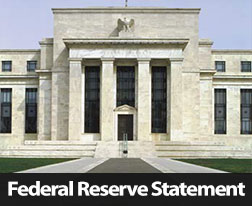 According to statement issued at the conclusion of today’s Federal Open Market Committee meeting, committee members decided against raising the target federal funds rate. Mixed economic conditions, slower economic growth in the 4th quarter and low inflation contributed to the decision against raising rates. The target federal funds rate was raised in December to a range of 0.25 to 1.59 percent after remaining at 0.00 to 0.25 percent for several years. While rising fed rates were expected to cause a hike in mortgage rates, mortgage rates fell after December’s rate hike.
 Last week’s scheduled economic news included releases from the National Association of Home Builders, Housing Starts, and Existing Home Sales. Weekly reports on new jobless claims and mortgage rates were also released.
  Home builders maintained December’s confidence level according to the National Association of Home Builders (NAHB) Housing Market Index for January. The latest reading of 60 mirrored December’s reading, but was two points lower than expected. Readings of more than 50 indicate that more builders were confident about housing conditions than those who were not.
 The first week of 2016 was quiet concerning housing and mortgage related news, but reports on construction spending and several labor-related reports were released. Construction spending is connected to housing markets as it provides evidence of builder confidence and also future housing supply. Labor market trends provide a sense of economic performance in general and can influence potential buyers on decisions about buying or not buying homes.