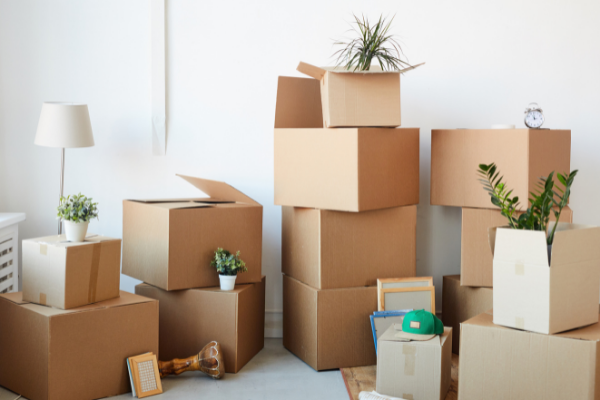
 The thrill of purchasing a new home is unparalleled; however, once you close on the sale, the dreaded unpacking process begins. You probably did not realize just how much stuff you had until you had to pack it all up. Worse yet, you need to unpack it when you get to your new home. If you don’t unpack intelligently, your new home could end up disorganized and full of clutter. With this in mind, how can you unpack without leading to a tremendous amount of clutter in your home?
Get Rid Of Items You Do Not Need
As you go through the boxes, ask yourself if you are actually going to need the items as you unpack them. If you do not need them, consider donating them to a local charity. Just because you brought it with you does not mean that you need to keep them. Evaluate the items in your boxes, and discard them when not needed.
Unpack Room By Room
Hopefully, you labeled your boxes as you packed them up, so this is a perfect time to organize your items before you open the boxes. Furthermore, it is faster to carry the boxes to the individual rooms than to carry the individual items to their designated locations one at a time. If you unpack room by room, you can ensure every item has a place (and that every item is in its place).
Take Advantage Of Organizers
While unpacking your boxes is half the battle, the other half is using organizers to keep your belongings in the right spots. There are plenty of organizers you can use to keep your items in the right locations. Examples include bins, boxes, and trays. You can use them to organize your storage spaces, drawers, and closets. You can even use wire organizers that prevent your cords from creating trip hazards. Use every tool available to keep your rooms organized.
Prevent Clutter From Developing In Your Home
There are a lot of homes that develop a significant amount of clutter during the unpacking process, but your home does not have to look this way! When you start to unload those boxes, put these tips to work for you!
 There are many people who are thinking about listing their homes, but they need to make sure they get as much money for their homes as possible. This could mean making a few upgrades and repairs around the home. There are some situations where it might be possible to DIY these projects, but there are other situations where it is better to call a professional, or CAP. When should homeowners take which path? Learn more below.
 Today, technology has come a long way, and this includes refrigerators. There are many people who have smartphones, home connected devices, and smart TVs. Now, there are smart refrigerators as well.
 Now is a great time to sell a home. Inventory is down to historic lows, according to recent reports, which means it’s a sellers’ market. Yes, many homeowners are reluctant to put their homes on the market for a variety of reasons. However, right now there are four big incentives for homeowners to sell, despite these objections.
 Title insurance is one of the few types of protection policies available to homebuyers and one that is often overlooked because of its optional nature.
 Even though not every home has a basement, those that do usually fall into one of three categories. The most common examples of basements include poured concrete, masonry block basement, and precast panels. What do homeowners need to know about the different types of basement construction?
  It is critical for everyone to find a home that is right for them. Given the current lack of inventory, this can be a significant challenge. Fortunately, the National Association of Realtors (NAR) keeps track of numerous market aspects, including how long the average family stays in a home. For the past few decades, the average family has stayed in their home for approximately six years; however, during the past few years, that average has gone up to nine years. This means that the average homeowner is keeping his or her house longer than he or she did in the past. Why is this happening?
 There are many people who purchase a home with a target monthly payment in mind. This monthly payment usually includes major expenses such as the monthly mortgage payment, real estate taxes, and homeowners’ insurance. At the same time, there are other costs as well, such as home repairs and maintenance.
 In the current economy, there are a lot of millennials who are thinking about buying a home; however, the price of homes is rising quickly. It can be challenging for millennials to save the money they need to buy a home. When this is combined with other monthly expenses they have, millennials might be financially unprepared to buy a home.
  Accidents can happen from time to time, which is why it is important for people to have insurance. While you might be able to fix some accidents on your own, others can lead to a significant amount of financial stress. This is why people must have insurance. Insurance is supposed to help individuals and families pay for catastrophic expenses; however, what happens if the insurance policy is not big enough to cover the expenses? That is where umbrella insurance can be helpful. What is umbrella insurance, and how does it work? Learn more about how umbrella insurance might be able to help you.